Where Does the Beef From Taco Y Taco Come From
Shutterstock
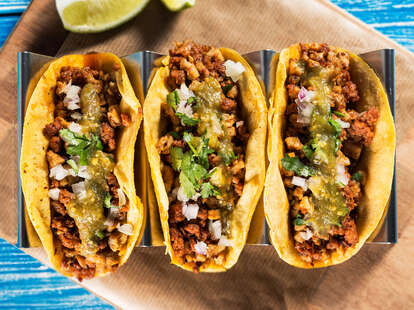
The taco is deceptively simple past reputation: tortilla, filling, and maybe some garnishes or salsa on top. But the reality is that and then much goes into the training for the myriad fillings of the ubiquitous taco that to dismiss this handheld repast as no more than than street nutrient is a huge disservice. Mexican food is a UNESCO-designated cultural treasure, and in the taco category, these vessels of masa, meat or meat-similar proteins and spice are widely varied.
Simply it's besides easy to become lost amongst all the options to stuff in tortillas and fall back on the basics. Which is fine, simply if y'all're not exploring the broad-world of taco fillings, yous're doing your palate a disservice. To give yous the knowledge you need to live your best taco life, we enlisted the expertise of Steven Alvarez, an assistant English professor at St. John'southward University in Queens who came to fame when he started teaching a taco literacy grade at the Academy of Kentucky. We discussed the origins and mythology behind some of the most popular tacos effectually and came to the conclusion that it could very well take years of report to tell the stories of every taco imaginable. In the meantime, here'south a handy guide to the taco fillings y'all're well-nigh likely to come beyond.
Al Pastor
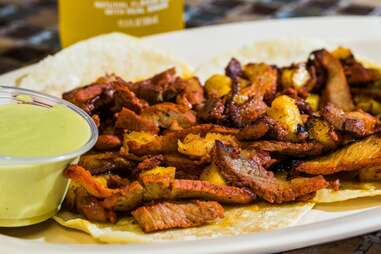
Tacos al pastor, the more famous cousin to the taco árabe, loosely translates to "shepherd-style" pork. The meat is marinated in a blend of chilies and spices, then slow-cooked on trompo using an open flame. The spinning mound of pork is normally topped with a pineapple, of which thin flecks are oftentimes garnished on peak of the protein for a sweetness, tangy kick.
Tacos Árabes
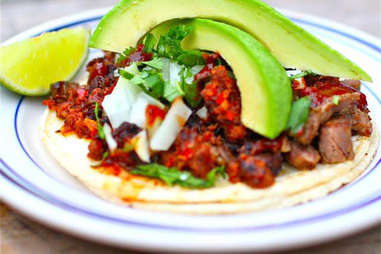
One distinct dish that showcases the culinary connectedness between the Middle E and United mexican states is the taco árabes, which utilizes flavorful slices of pork (a departure from halal-friendly proteins of the Arab/Muslim-bulk region) from a trompo or spit. The marinated pork is and so stuffed into a pillowy, pita-like flour tortilla.
Barbacoa
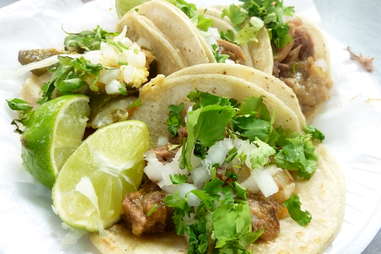
Traditionally, Alvarez says barbacoa references the way of cooking meat by the Taino people of the Caribbean. In Mexico, information technology refers to slow-cooking over an open up flame or in a hole dug into the ground until the fatty protein is tender. In northern United mexican states and in south Texas' Rio Grande Valley, the economical-yet-flavorful beef head or beef cheeks (cachete) or goat (cabrito) is ofttimes utilized and served on weekends, such as at Vera'southward Lawn Bar-B-Que in Brownsville.
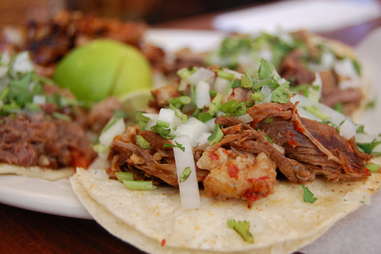
Birria
Head to Guadalajara in the western Mexican state of Jalisco, and you'll find the land's birria capitol. A spicy meat stew, ordinarily prepared with caprine animal that'south marinated in a spicy guajillo chili-based broth, birria street vendors are commonplace all over the region. Often served during weddings or other special occasions, birria is traditionally a special occasion dish, but also often comes in taco course. Surrounding states like Michoacán, parts of Durango, and Zacatecas—which specializes in birria de res (beef)—also make variations of the dish.
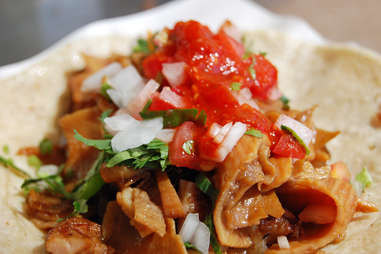
Buche
Buche refers to the breadbasket of the grunter. When stewed for several hours with a variety of spices and chiles, the meat breaks down to a tender, somewhat chewy texture. Virtually would consider buche to be less spongy than beef tripe.
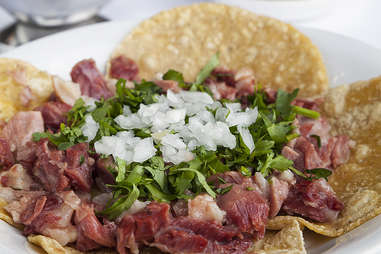
Cabeza
The meat from the head of a cow is particularly flavorful, typically only requiring table salt. Sometimes information technology'south braised to tenderness, while other taquerias may serve it al vapor or steamed. Some spots may just utilize the cheeks, such is the example with barbacoa, while carnicerias may prepare the head whole.
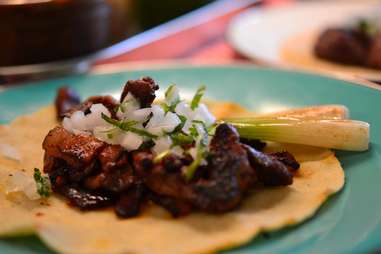
Campechanos
Typical in southern Mexico such as in u.s. of Campeche and Tabasco, campechanos are for when you can't go enough meat in your life. Tacos campechanos are oft made with a combination of whatever is leftover to create a new, complex-in-flavour medley of meats. Usually, it's a combination of carne asada or cecina de res (thinly sliced beef), longaniza (a spicy pork sausage), or chorizo and maybe chicarrón, providing a balanced mix of salty, spicy and crunchy.
Carne asada
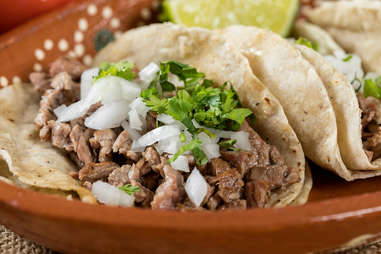
Carne asada literally translates to grilled meat, but in this context it's referring to ranchera or flap steak from the short loin section of a cow. Carne asada is typical in the northern frontier states, in detail Sonora. The meat is commonly marinated in a blend of citrus juices, cumin, and other spices so simply grilled. This particular cut of meat is particularly thin, making it like shooting fish in a barrel to merely grab a hunk with a tortilla and eat it manifestly, merely in taquerias the protein is typically chopped into small bits.
Carnitas
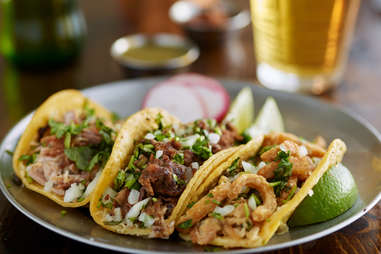
The state of Michoacán is carnitas state. Translating literally to "piffling meats," carnitas is made with shredded pork shoulder that's braised or simmered for several hours in its own fat until tender so that the meat easily comes apart. The slow cooking brings out a simple pork flavor, and if done correct the shredded meat bits come up out slightly crispy on the ends.
Cecina
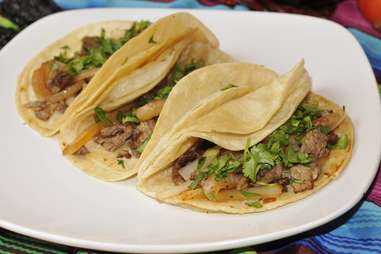
Cecina, or carne, refers to beefiness or pork that's been expertly sliced, salted, and dried partially in sheets or strips in the air, dominicus, or smoke. For beef, a large piece is marinated in a coating of chili pepper, substantially turning information technology into a continuous roll of slices. The result is smoky meat that easily folds into a tortilla, with no need for chopping upwards into pocket-size bits.
Chapulines
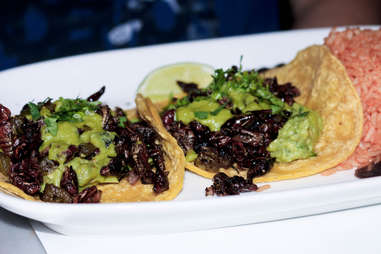
Deriving from the Nahuatl language, chapulines are grasshoppers and are ordinarily eaten in parts of Mexico. In more than recent years chapulines have been touted as one of the most sustainable food sources in the world, though they have been a staple in southern Mexico for centuries. They are often dried and toasted and flavored with lime juice, garlic, and sometimes chili, making for a protein-rich, low-fat, savory, earthy, and crunchy snack, not unlike a basin of dried shrimp. They can be eaten lone such equally at sporting events, but chapulines are also oftentimes sprinkled into tacos, tostadas, and fifty-fifty pizza.
Chicharrón
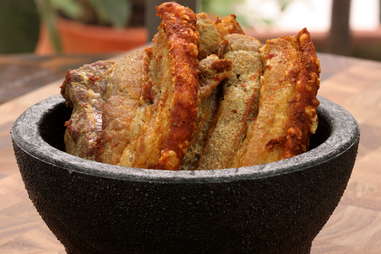
Most of y'all are probably familiar with chicharones every bit pork rinds, or fried pork skins. Lonely, chicharrones are a satisfying snack while watching the big futbol game. But as a taco filling, they take on a whole new quality. Tacos de chicharrón are soft, not crispy, afterward being simmered in salsa verde for a spicy, somewhat chewy (but in a skilful fashion) combination.
Chorizo
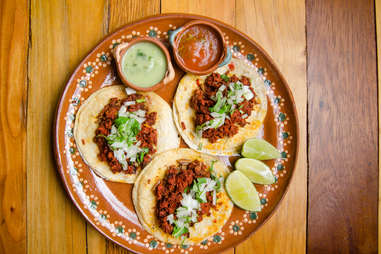
The Spanish ruled over Mexico for centuries, bringing their language, Catholicism, cattle, and disease. They as well brought chorizo, which in Spain is usually cured and smoked. In Mexico, it'southward sold fresh and uncooked. Mexican chorizo is a blend of minced meat—typically pork (though other meats are likewise utilized)—that'southward seasoned with spicy chili peppers. To cook it, the ground meat is removed from its casing. The state of Toluca is considered the majuscule of chorizo and is available in vivid-blood-red or light-green.
Cochinita pibil
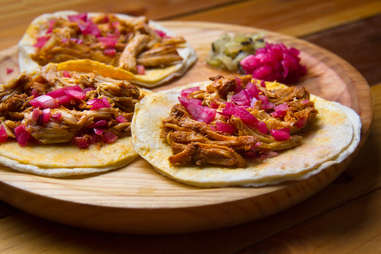
In the south of United mexican states from the Yucatan Peninsula, cochinita pibil reigns supreme. Instead of beef, a suckling hog is marinated with many of the region'due south citric juices, such every bit bitter oranges, lemons, limes or vinegar. The pig is usually seasoned with annatto seed, giving it a burnt orangish hue, then wrapped in a banana leaf and slow roasted. The result of the wearisome cooking is an incredibly tender meat.
Cueritos
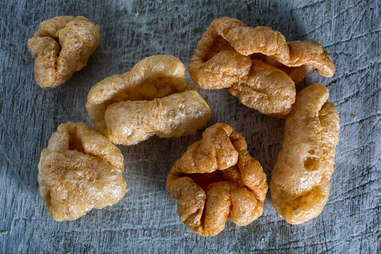
Cueritos refers to hog skin, simply don't confuse them to chicharrones (see higher up). Instead of deep frying, these thin strips of skin are pickled in vinegar and seasoned with chilis, peppers, oregano, and other spices.
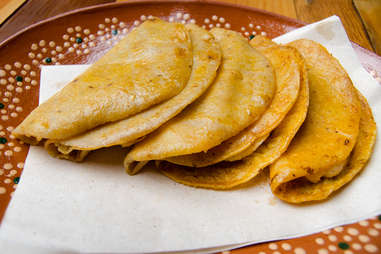
De canasta/al vapor
No, not a filling, only rather a fashion of taco that translates to basket for the vessel they sit down in after they've been made. Tacos de canasta, besides known as tacos al vapor or tacos sudados (sweaty), start with a fried tortilla that'due south filled with ingredients that have the ability to sit down out for several hours at a fourth dimension. Once assembled, they're steamed and are later sold from a handbasket by street vendors, peculiarly in Mexico City (they tin can also exist found in many chilango restaurants stateside). While DF vendors make full them with all kinds of ingredients like tinga or cochinita pibil, the ones filled with potato (which is mashed to a puree consistency) or refried beans tend to hold up the best.
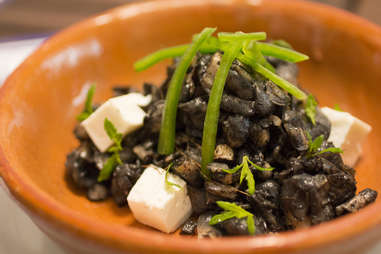
Huitlacoche
Well-nigh of the meat fillings can be traced to Spanish colonialism, with the introduction of livestock to the Americas. But at that place's ane ingredient that has been quintessentially tied to Mexico'southward identity long before the Spaniard invasion and that'southward corn. And with corn comes huitlacoche. Known past several other names, including Mexican truffle, corn smut, or corn mushroom, huitlacoche is a fungus that grows on organic corn and is extremely rare. Simply if you practice come across huitlacoche on the menu of a Mexican eatery, devour it. When heated or canned (you're non likely to find the fresh variety in most U.South. establishments), the unremarkably white, velvety morsels plough an inky black and the flavor has a rich earthiness to information technology, similar to that of a mushroom.
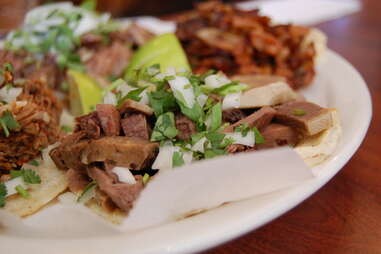
Lengua
Spanish for beef natural language, some say lengua is likewise chewy, but if done correctly, that's not the case. Slow cooked for several hours, and so chopped into small, compatible chunks, the texture is smoother and more than buttery than other cuts of beef.
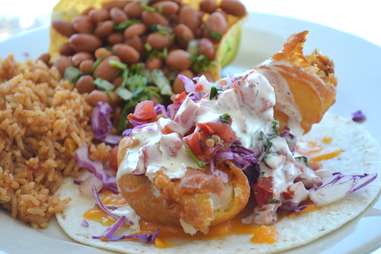
Pescado
While fish tacos can exist institute on menus everywhere, the birthplace of the original is Baja California, which sits forth the Pacific Ocean directly due south of California. They normally consist of a fried or grilled white fish filet that's topped with cabbage or lettuce, pico de gallo salsa, and some sort of creamy white sauce—either sour cream or a citrusy mayo. Many Baja-area fish taco vendors likewise make tacos with camarones (shrimp) that are dressed in the same manner.
Pollo
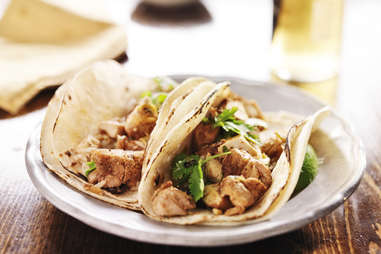
Pollo means chicken. And if y'all run across this on a menu, the pollo is ordinarily marinated and grilled and and so cut into chunks, while other times it'south shredded to make tinga (see below). Sometimes, chefs requite the craven a southern-fried twist. And if y'all've been to Taco Bell relatively recently, you might have seen the pollo act equally a deep fried shell.
Res
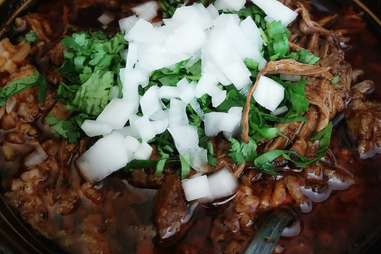
Res ways beef or livestock. So if you see it as part of whatever card detail, just know it know it's gonna be cow-related.
Sesos
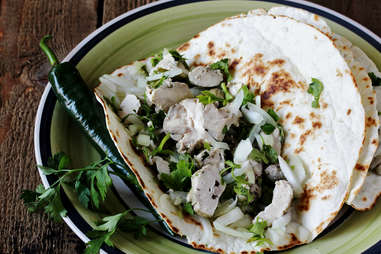
If lengua is smoothen, sesos—or moo-cow brains—are custard. The texture is oft favored by those who adopt a silky soft meat. Preparation involves boiling downwardly the head until the meat falls off the os, then gets seasoned or either braised or grilled.
Suadero de res
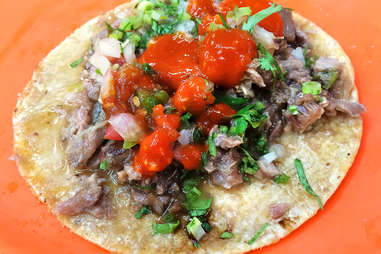
Suadero de res calls for the section of beef between the abdomen and leg. The meat is stewed in lard for several hours, then fried, resulting in a crispy caramelization. Alvarez says most often, tacos de suadero are associated with United mexican states City.
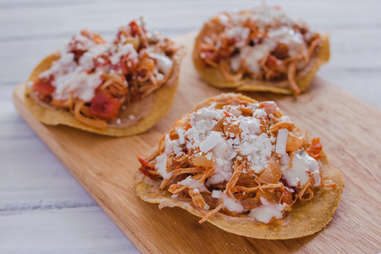
Tinga
For folks wanting to steer away from shredded pork, beef, goat, lamb or some of the other meaty fillings, there's craven tinga with origins in the the state of Puebla. Tinga is flavorful chicken thighs are braised in a tomato-chipotle chili sauce and so shredded.
Tripas
Unremarkably referring to the cow's stomach or intestines, tripas require cleaning, boiling, and cooking to avoid a rubbery texture. Traditionally, especially in farming areas, tripas are often prepared in a "disco" made with two tiling discs, which are stacked on top of each other and have a pole welded in the middle. It kind resembles a wok. In the upper disc, the tripas are boiled and cooked and the lower disc holds the charcoal or forest used to heat the ingredients.
Want more Thrillist? Follow us on Instagram, Twitter, Pinterest, YouTube, TikTok, and Snapchat.
Serena Maria Daniels is writing & reporting at the intersection of halal burgers, Ramadan IHOP, grasshopper pizza, taco literacy & urbanism. She is a recovering daily newspaper reporter and the Chingona-in-Chief at Tostada Magazine.
Source: https://www.thrillist.com/eat/nation/best-types-of-tacos-explained

Postar um comentário for "Where Does the Beef From Taco Y Taco Come From"